 Skip to content
Fire season in Southern California is not something that shows up on a calendar and gives you time to prepare. It arrives fast, conditions escalate quickly, and the difference between a roof that holds up and one that does not often comes down to decisions made weeks or months earlier.
If you manage a commercial property in the Los Angeles area, the San Fernando Valley, or Ventura County, here is what you need to do right now to make sure your roof is not a liability when conditions turn.
1. Know Your Roof’s Fire Rating and Verify It Still Applies
Commercial roofing systems are rated for fire resistance. Class A is the highest rating, meaning the roof assembly provides the strongest resistance to fire spread. Class B and Class C offer progressively less protection. Most local codes in Southern California require at minimum a Class A assembly for commercial properties.
The problem is that fire ratings apply to the entire roofing system as it was originally installed. When repairs are made with materials that do not match the original assembly, or when multiple layers of roofing have been added over time, the original fire rating may no longer be valid even if the roof appears functional.
If you do not know your roof’s current fire rating, or if your roof has had significant repairs or additions since it was last fully replaced, that is worth finding out before fire season peaks. A qualified roofing contractor can assess whether your current assembly still meets the rating it was installed to and flag any areas where the system has been compromised.
Property managers who have a year-round maintenance program in place typically have this information on file. It is part of what a structured maintenance relationship should include.
2. Clear Combustible Debris From the Roof Surface
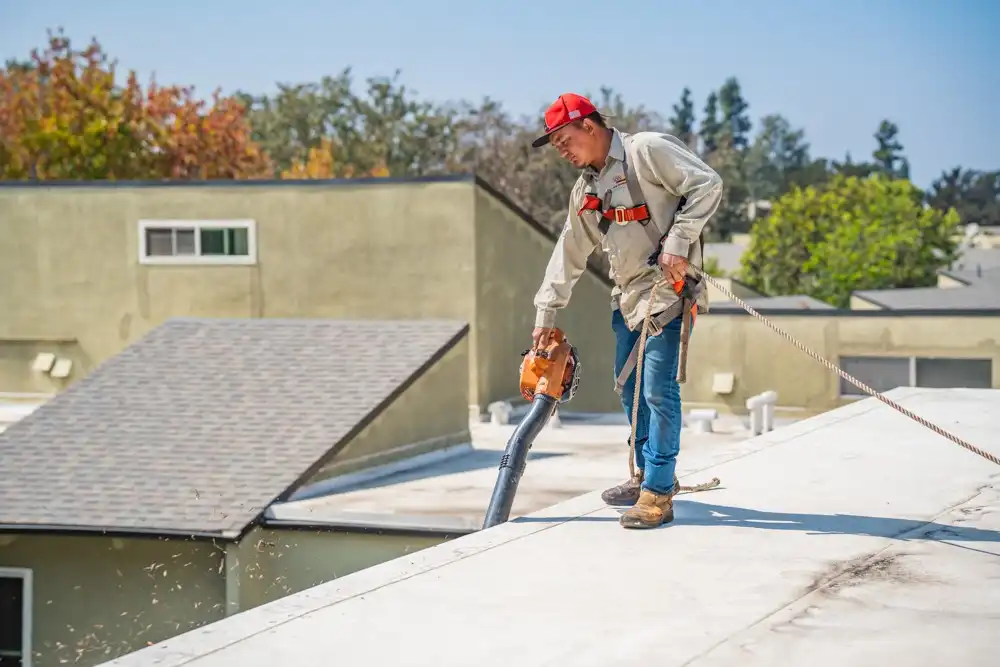
Debris accumulation is one of the most common and preventable fire risks on commercial rooftops. Dried leaves, branches, HVAC lint, and trash that collects around drain areas and equipment curbs can ignite from ember cast, which travels significant distances during high-wind fire conditions.
This is not a complicated fix, but it requires someone actually getting on the roof and doing it. A visual inspection from the ground will not catch debris pockets around mechanical equipment, in drain sumps, or behind parapet walls.
For properties under a maintenance program, debris clearing is typically included as part of scheduled seasonal visits. For properties without a maintenance plan, this is a task that needs to be assigned and confirmed completed before the peak of fire season, not scheduled and forgotten.
3. Inspect All Roof Penetrations and HVAC Curbs
Every penetration on a commercial roof, HVAC units, plumbing vents, electrical conduit, skylights, is a potential entry point for embers during a fire event. Gaps in flashing, cracked pitch pockets, and deteriorated sealant around penetrations allow embers to enter the roof assembly and ignite materials below the surface.
This type of damage is often invisible without a close inspection. Flashing can appear intact from a distance while gaps have opened at the seam. Sealant can look discolored but still be functional, or it can look clean while being fully degraded.
A penetration inspection covers every point where the roof membrane is interrupted. Any gap, separation, or deteriorated seal is a direct pathway for ember intrusion. If it has been more than a year since your roof penetrations were inspected and resealed where needed, fire season is the right time to get that done.
4. Address Any Existing Membrane Damage
A compromised roof membrane is a fire season liability. Blistering, cracking seams, exposed substrate, and areas where the membrane has pulled away from the surface all represent conditions that accelerate fire spread if embers land on or near those areas.
Modified bitumen, which is one of the most common commercial roofing systems in Southern California, is petroleum-based. An intact membrane in good condition resists ignition. A membrane with open blisters, exposed felt, or failed seams does not have the same resistance and gives embers more opportunity to penetrate.
Any membrane damage that is visible is worth addressing before fire season peaks. This is not about doing unnecessary work. It is about making sure the roof system is performing as designed at the time of year when that performance matters most.
If your roof has deferred repairs sitting on the list, moving them up ahead of fire season is a straightforward risk management decision.
5. Document Your Roof Condition Before Fire Season Peaks
This is the tip most property managers skip, and it is the one that protects them most if something goes wrong.
Standard commercial property insurance covers fire damage. But disputes arise when insurers question whether damage was pre-existing. A roof that was already deteriorating before a fire event may face a coverage challenge that a roof with documented condition history does not.
Walk the roof now. Take photos. Date them. Note any existing damage, repairs, or areas of concern in writing. Keep that documentation somewhere accessible.
If you have had a professional inspection in the past 12 months with a written condition report, that document is your baseline. If you have not, getting one before fire season peaks gives you a defensible record of your roof’s condition prior to any event.
The property managers who handle fire season with the least stress are the ones who have accurate, current documentation and a maintenance program that keeps the roof in known condition year-round. That combination is hard to replicate after the fact.
Fire Season Does Not Wait
The five items above are not complicated. But they all require someone to actually get on the roof and do them. The window to act before fire conditions peak is shorter than it feels, and the consequences of a roof that is not ready are significant.
A commercial roof is the first line of defense between a fire event and the property and tenants underneath it. Treating it that way before something happens is the only time you have any control over the outcome.
Stop managing your roof one emergency at a time. SBR Roofing offers commercial roof maintenance contracts that cover seasonal inspections, debris clearing, penetration checks, and documented condition reports year-round. One agreement, and fire season prep is handled before you have to think about it. Learn more or get started at https://sbrroofing.com/services/preventative-maintenance/ or call (818) 678-9791.