 Skip to content
Published by Gary Stewart · April 2026 · Commercial Roofing | Southern California
Every spring, commercial property owners across Southern California face the same challenge: months of rain have quietly tested their roofing systems, and summer heat is just around the corner. The question isn’t whether your roof was affected — it’s how much damage went unnoticed.
A professional spring roof inspection is the single most cost-effective step a property manager or building owner can take to avoid expensive emergency repairs in the months ahead. Here’s why it matters, what it involves, and what to expect when you schedule one with a qualified commercial roofing contractor.
Why Spring Is the Most Critical Time for a Roof Inspection
Southern California may not see the snow and ice that damages roofs in other parts of the country, but the region’s wet season — typically November through March — creates its own set of roofing vulnerabilities. Water intrusion, drainage stress, high winds, and UV degradation from early spring sun can all compound over time if left unchecked.
By the time summer arrives, any existing weak points in your roofing system are exposed to intense heat that accelerates deterioration. What might cost a few thousand dollars to repair in April can become a five-figure problem by August. The math is simple: catching issues early saves money.
Additionally, roofing contractors tend to have more scheduling flexibility in the spring than in the middle of summer, when demand peaks. Booking an inspection now means faster turnaround and more competitive pricing on any recommended repairs.
What a Commercial Roof Inspection Covers
A thorough commercial roof inspection isn’t a quick walk-around. A qualified roofing professional will systematically evaluate every major component of your roofing system, including:
- Membrane condition: For flat roofs — which account for the majority of commercial buildings in Southern California — the membrane is the primary waterproof barrier. Inspectors check for blistering, cracking, splitting, and areas where the membrane has begun to separate from the substrate.
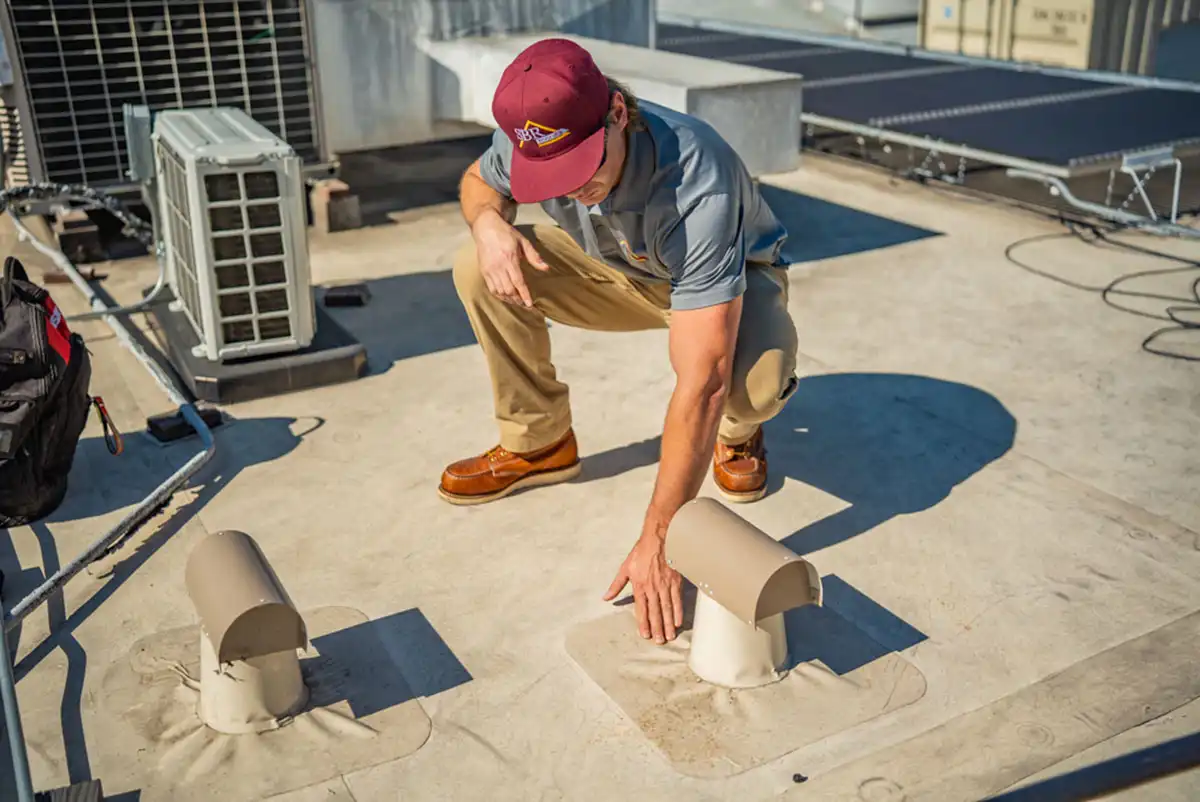
- Flashings and penetrations: These are among the most common failure points on any commercial roof. Inspectors examine the flashing around HVAC units, skylights, vents, drains, and parapet walls for signs of lifting, cracking, or failed sealant.
- Drainage systems: Clogged or damaged drains and scuppers allow water to pond on flat roofs, dramatically increasing load and accelerating membrane wear. A spring inspection ensures your drainage system is clear and functioning correctly after winter debris accumulation.
- Seams and field laps: On torch-down modified bitumen, built-up, and single-ply systems, seams are critical. Inspectors verify that field seams and edge terminations remain tight and watertight.
- Substrate and insulation: If moisture has penetrated the membrane, it may have reached the insulation layer beneath. Experienced inspectors look for soft spots, air pockets, discoloration, and other signs of moisture retention in the substrate.
- Interior indicators: A complete inspection often includes a review of interior ceiling conditions, particularly in areas with recent water intrusion reports. Stains, efflorescence on walls, or soft ceiling tiles all point to active roof issues.
The Difference Between a Visual Check and a Professional Inspection
Many property managers perform their own informal roof checks — a quick look from ground level or a brief walk to see if anything obvious has changed. While this kind of awareness is valuable, it’s not a substitute for a professional inspection.
Experienced commercial roofing contractors are trained to identify early-stage failures that aren’t visible to the untrained eye. A small blister in a membrane that looks cosmetic to a layperson may indicate moisture infiltration that will expand through summer heat cycles. A hairline crack at a flashing detail may be drawing water into the building during every rain event — even if there’s no visible interior leak yet.
The difference between a surface-level review and a professional inspection is often the difference between a $1,500 repair and a $20,000 emergency reroofing project.
How Often Should Commercial Roofs Be Inspected?
Industry best practice calls for a minimum of two professional inspections per year — one in the fall before rain season begins, and one in the spring after it ends. Properties with older roofing systems, heavy rooftop mechanical equipment, or a history of water intrusion should consider quarterly inspections.
For building owners enrolled in a preventive maintenance plan, inspections are typically included in the service agreement, which means the cost is predictable and the documentation is ongoing. This is particularly valuable for HOAs and commercial property managers who need to maintain detailed maintenance records for insurance and liability purposes.
What Happens After the Inspection?
A reputable roofing contractor will provide you with a written inspection report documenting all observed conditions, photographs of areas of concern, and a prioritized list of recommended actions. This report serves several purposes:
- It gives you a clear, documented baseline for your roofing system’s current condition.
- It helps you prioritize capital expenditures — understanding which repairs are urgent versus which can be planned for the next budget cycle.
- It creates a record that can be valuable for insurance claims if weather-related damage occurs later in the year.
- It gives you leverage in conversations with tenants or ownership groups that may question deferred-maintenance decisions.
A detailed post-inspection report is what sets professional commercial roofing contractors apart from companies that simply show up, patch something, and move on.
What to Look for in a Commercial Roofing Contractor
Not all roofing contractors are qualified to inspect and maintain commercial roofing systems. When selecting a contractor for your spring inspection, look for:
- A valid California Contractor’s License (C-39 Roofing classification)
- Documented experience with commercial flat roof systems — modified bitumen, single ply, built-up, and fluid-applied roofing.
- Written inspection reports with photographs
- Verifiable references from comparable commercial properties
- Transparency about pricing for both the inspection and any recommended repairs
SBR Roofing holds California Contractor’s License #802575 and has been serving commercial property owners throughout Southern California for over 60 years. Our inspection process is thorough, documented, and designed to give property managers the clarity they need to make informed decisions about their roofing systems.
Don’t Wait Until There’s a Problem
The most expensive roof repairs are almost always the ones that could have been prevented. Water damage compounds quickly — what starts as a slow leak in April can become structural damage by September. A spring inspection is one of the most straightforward ways to protect your asset, control your maintenance budget, and avoid the operational disruption of emergency repairs.
Schedule your inspection before summer arrives and before contractors’ schedules fill up. A few hours of professional assessment now can save months of headaches — and tens of thousands of dollars — later.
Contact SBR Roofing today and avoid emergency roofing costs this summer.
About the Author
As a proud fourth-generation commercial roofing contractor, Gary Stewart has dedicated his career to upholding the legacy of quality and craftsmanship established by his family. Today, as a managing partner, he works alongside his relatives, blending tradition with innovation to deliver exceptional roofing solutions. His commitment to excellence and teamwork not only strengthens SBR Roofing’s projects but also deepens those family bonds, ensuring that every roof we build is a testament to our shared values of integrity, durability, and service. Together, we are not just constructing roofs; we are building a future for our community and our family lineage.