 Skip to content

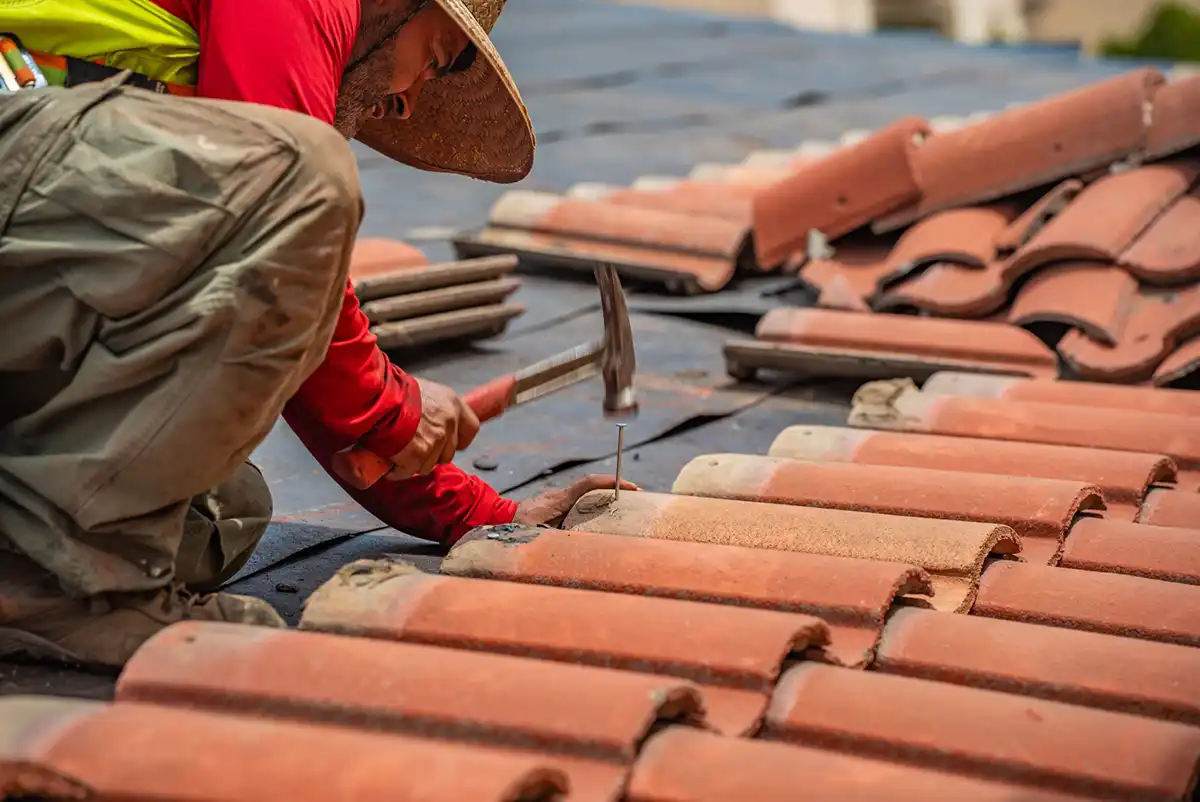
A concrete or clay tile roof can last 50 years or more. The underlayment under it typically does not. When it wears out, the tile usually does not need replacing. It needs to be lifted, the underlayment replaced, and the same tile relaid. For most Southern California HOAs, that is the most cost-effective way to extend the life of the roof.
The tile is not the waterproofing
Tile is the armor. It shields the roof from sun, wind, and foot traffic and sheds most of the water. The waterproofing layer is the underlayment, the membrane installed over the deck before any tile goes on. Water gets under tile during every storm, and the underlayment carries it to the gutters and keeps it out of the building.
That layer sits trapped under tile for decades, in heat and constant temperature swings, where no one sees it. It commonly breaks down well before the tile does, often in the 20 to 30 year range. Tile that looks nearly new from the parking lot can be sitting on a membrane that has dried out and cracked.
How failure shows up
- Ceiling stains in upper-floor units after rain
- Leaks that move to different spots from year to year
- Spot repairs that fix one leak while another appears nearby
- A string of small repair invoices instead of one planned project
That last one is the signal for a board. Each patch is reasonable on its own. Together, they often cost more than doing the roof right, and the building keeps taking water in the meantime.
What lift and relay involves
- Tile is removed in sections and staged.
- The deck is inspected, and damaged sheathing is repaired.
- Old underlayment comes off and new underlayment goes down.
- Penetrations, valleys, and flashings are redone while the roof is open.
- The original tile is relaid, with broken pieces replaced from salvage or matching stock.
Some tile will break during removal. That is normal, and a good contractor builds it into the scope.
Why boards should plan it, not wait for it
Phasing. Larger communities can often be done building by building. That spreads the cost across budget cycles and limits disruption for residents, but only if it is planned before the leaks start.
Reserves. Underlayment replacement belongs in the reserve study with a realistic timeline. If the tile is treated as the life of the roof, the reserve tends to come up short and a special assessment follows.
Timing. The roof is open during lift and relay, so the work belongs in the dry season.
Planning a tile roof project for your community?
SBR Roofing has served HOAs, condo communities, and property managers across Los Angeles and Ventura County since 1959. Give us a call 818.843.0544 to schedule an assessment.