 Skip to content
Roofing Blogs
60+ Years Serving Southern California
Welcome to the SBR Roofing Blog—your source for expert commercial roofing insights. With over 60 years of industry experience, we share tips, trends, and best practices to help property owners, managers, and professionals make informed roofing decisions. Stay tuned for expert advice from the SBR team.
Are HVAC inspection reports useful for budgeting capital expenses?
Yes. A documented inspection report with photos gives property managers a record of equipment condition over time, which is useful for forecasting when a unit is approaching the end of its service life and budgeting ahead of an unplanned failure.
What happens if an inspection finds a roof issue caused by HVAC equipment?
When an inspection finds roof damage related to HVAC equipment, such as a worn curb seal or a penetration issue, SBR documents it in the same report and can scope the repair directly, since the same company handles both systems. There is no need to bring in a second contractor
What is the difference between an HVAC inspection and ongoing maintenance?
An inspection is a point in time assessment that documents the current condition of the equipment and the surrounding roof. Maintenance is the ongoing, scheduled work, like filter changes and coil cleaning, that keeps the equipment running properly between inspections. Most buildings benefit from both on a regular cycle.
Can a roofing contractor inspect rooftop HVAC equipment?
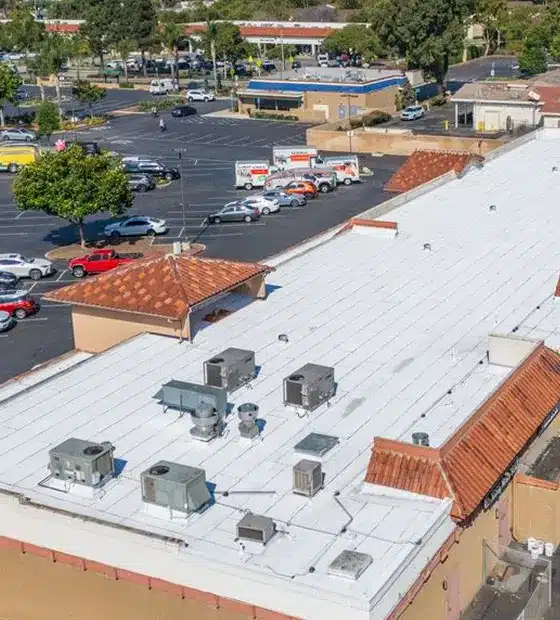
Yes, when the contractor has licensed HVAC technicians on staff. SBR Roofing inspects rooftop HVAC units and the surrounding roof system in the same visit, since many HVAC related roof failures start where equipment meets the membrane and are easy to miss when two separate vendors handle each system.
How often should commercial HVAC units be inspected?
Commercial HVAC units should generally be inspected twice a year, in spring and fall, alongside seasonal roof inspections. Buildings with older units or known drainage issues may need quarterly checks. Pairing the inspection with an existing roof inspection schedule reduces cost and catches issues at the equipment to roof interface.