 Skip to content

Description: Rooftop HVAC equipment is a common source of roof leaks. Learn where leaks start around curbs, penetrations, and condensate lines, and what to inspect.
Keywords: hvac inspections

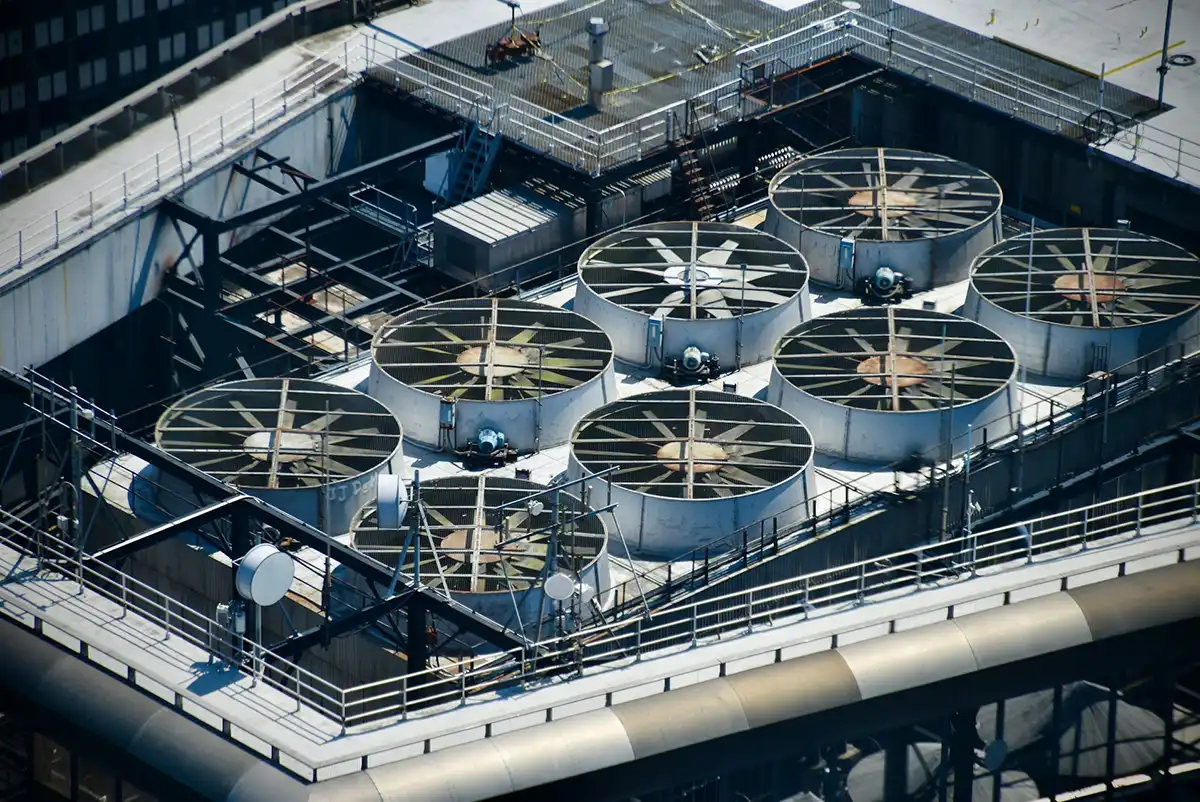
Alt Text: Industrial cooling fans on a rooftop
Rooftop HVAC units cause roof leaks mainly at curb flashing, refrigerant and electrical line penetrations, condensate discharge points, and worn areas from foot traffic. The unit itself rarely leaks. The trouble is the roof around it, where sealants age, membranes wear, and water finds the seams.
Picture a property manager on a Monday morning with a brown stain spreading across a ceiling tile in the second-floor conference room. The rooftop unit sits almost directly overhead, so the assumption is immediate: the air conditioner is leaking. An HVAC company gets called, the unit checks out fine, and the stain keeps growing after the next rain. This is one of the most common stories in commercial buildings, and the explanation is almost always the roof around the equipment, not the equipment itself.
The Curb Takes a Beating
Most rooftop units sit on a curb, a raised frame that lifts the equipment above the roof surface. The roofing membrane runs up the side of that curb and is sealed with flashing, and that vertical transition is one of the most stressed spots on a commercial roof. Sun dries out and cracks the sealants. Vibration from the unit slowly works fasteners and terminations loose. The roof expands and contracts with every temperature swing, pulling at the flashing day after day.
The unit itself can make things worse. If its panels and curb cap do not shed water properly, rain gets pushed behind the flashing instead of away from it, and a small gap at a corner becomes a path into the building.
Pipes, Conduit, and Small Holes
Every rooftop unit is connected to the building by lines that pass through the roof: refrigerant lines, electrical conduit, and sometimes gas piping. Each of those is a hole that has to stay sealed for as long as the roof is in service. Pipe boots crack in the sun, pitch pockets shrink and pull away, and sealant that was fine at installation hardens and separates. Nothing about a failed penetration looks dramatic from the roof, but water finds it quickly.
Water the Unit Makes Itself
An air conditioner produces condensation, and where that water goes matters. If the drain line discharges straight onto the roof, the area around the unit can stay wet for hours every day. Standing water wears at the membrane faster than ordinary rain, encourages algae growth, and can stress seams when it freezes in cold snaps. A drain line should carry that water to a proper discharge point, not release it beside the equipment.
Foot Traffic Adds Up
Every service visit puts someone on the roof, and the route from the access point to each unit tends to be the same every time. Over years, those paths get walked hundreds of times. On single ply and modified bitumen roofs, repeated traffic can scuff, puncture, or abrade the surface, especially where a technician sets down tools or drags a panel across the membrane. Walk pads along regular routes are a modest cost that prevent exactly this kind of damage.
Leftovers From Old Equipment
One source of leaks that surprises people is equipment that is no longer there. When an old unit is removed, its curb or the openings it used sometimes stay behind, capped but not properly sealed. Because no current equipment is tied to them, nobody thinks to inspect them, and they can leak for years without anyone connecting the stain to the roof.
Following the Water
The practical takeaway is that a leak near a rooftop unit should be traced, not just patched where it appears. Water travels along insulation and decking before it shows up inside, so the stain on the ceiling may be several feet from the real entry point. A good inspection looks at the curb corners and sealants, every pipe and conduit penetration, the condensate discharge, any worn areas along access routes, and any abandoned curbs. Starting with those places solves far more leaks than starting with the equipment.
Frequently Asked Questions
How do I know if a leak is from the HVAC unit or the roof?
Water that appears only while the unit is running often points to condensate. Water that appears after rain points to flashing, the curb, or a penetration. Keeping track of when and where the leak shows up, then looking closely at the curb and the drain, usually narrows it down.
Do walk pads really matter on a commercial roof?
They do. Repeated service traffic wears a path into the membrane over time, and walk pads spread that load and protect the surface. They cost little compared with membrane repairs along a heavily used route.
What should happen to the curb when an old unit is removed?
It should either be reused with new flashing and a proper cover, or removed with the roof patched. An old curb or opening left without proper sealing is a common hidden source of leaks.
|
Seeing moisture near rooftop equipment? Call (818) 678-9791 or visit sbrroofing.com. Serving Burbank, Pasadena, the San Fernando Valley, and Ventura County. |