 Skip to content

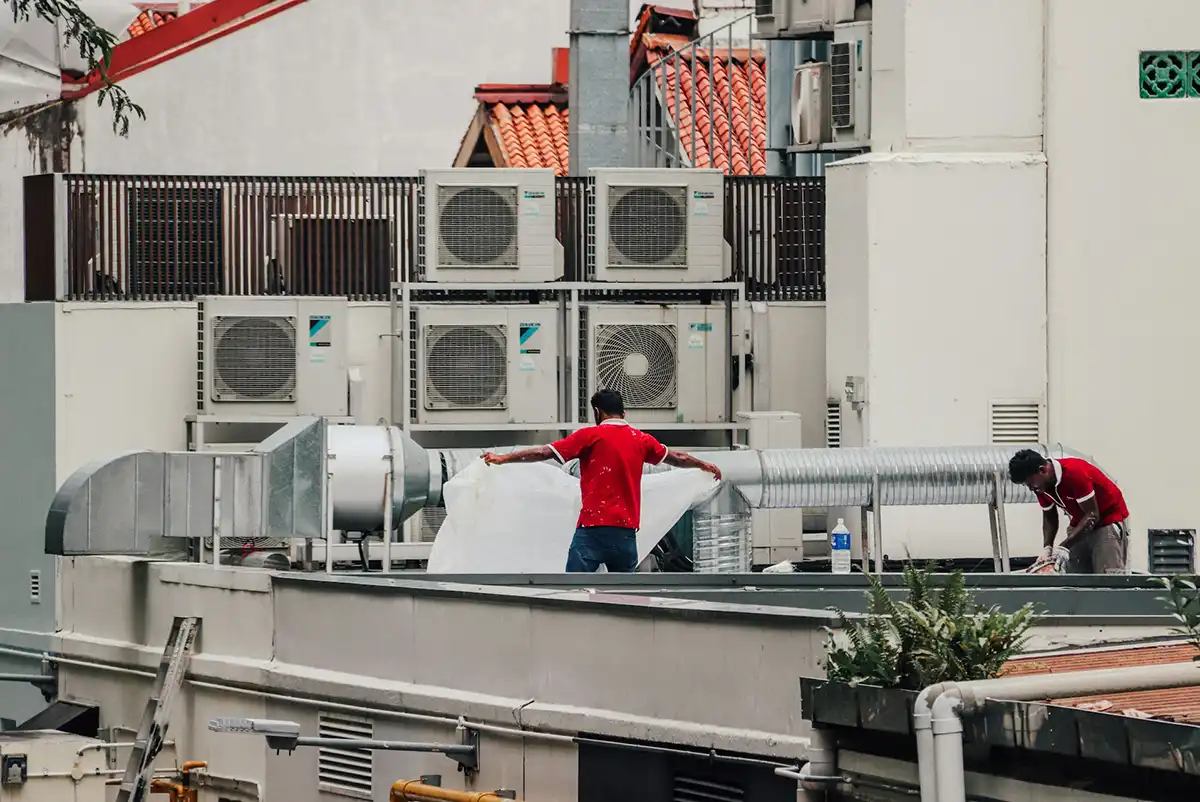
Commercial HVAC units in Southern California should be serviced at least twice a year: once in spring before the cooling season and once in fall before heating. Buildings with older equipment, heavy cooling loads, or dusty surroundings often need quarterly service. The right interval depends on how hard the units actually run.
Service intervals are usually written as if every building lives in the same climate. A rooftop unit in a mild northern city might run hard for a couple of months each summer and then sit mostly idle. The same model on a flat roof in Burbank or Pasadena tells a different story, and that difference is the reason a one-size schedule tends to leave Southern California buildings under-maintained.
A Cooling Season That Never Really Ends
In the San Fernando Valley, inland Ventura County, and the Pasadena area, many commercial units cool for most of the year. A warm October, an early May heat spell, and a long summer in between add up to something closer to eight or nine months of regular running. More run hours means more wear on compressors, fan motors, belts, and contactors, so a unit here ages faster than the same unit in a cooler place.
The environment adds its own wear. Santa Ana wind events push dust and debris into coils and filters, and buildings nearer the coast deal with salt in the air that speeds up corrosion on coils and cabinets. Neither shows up on a manufacturer's service interval chart, but both are visible to anyone who opens a panel.
Why Twice a Year Is the Starting Point
The most common baseline is one visit in spring and one in fall. The spring visit prepares the system for the cooling season. Coils are cleaned, refrigerant readings are recorded, drains are cleared, and electrical parts are tested before the first real heat wave, when every technician in the region is busy and parts are hard to get.
The fall visit looks at heating mode and checks that the equipment is in good shape heading into cooler months. It is also a sensible time to walk the roof around the units before winter rain arrives, since the curbs and penetrations that have baked all summer are the ones most likely to have cracked.
When Twice Is Not Enough
Some buildings simply cannot afford the risk of a breakdown. A restaurant's rooftop units carry grease and heat load that clog coils quickly. A medical office or a server room has no tolerance for a unit that quits on a hot afternoon. In these cases quarterly service is less a luxury than a cheap form of insurance. Units older than about 10 to 12 years, equipment near construction or open lots, and retail or office buildings with long operating hours also tend to benefit from the extra visits.
The useful question is not how old the unit is but what happens if it fails. If the answer is a few uncomfortable hours in a rarely used storage area, twice a year is plenty. If the answer is lost business or a shut-down floor, the schedule should match that risk.
Let the Building Tell You When to Come Back
A calendar is a starting point. A strong wind storm, roof work or construction nearby, a new tenant who raises the cooling load, or occupants who start reporting noises and uneven temperatures are all reasons to call for a visit regardless of where the schedule stands. Waiting for the next scheduled date after one of these events is how a minor issue turns into a failure in the middle of summer.
Setting a Schedule You Will Actually Keep
The easiest way to build a sensible plan is to start with an inventory of every unit: its age, size, location, and what part of the building it serves. Separate the units that critical spaces depend on from those serving general office areas, then match the frequency to the consequences of failure. A plan built that way costs less than servicing everything quarterly and protects far more than servicing everything once a year.
Frequently Asked Questions
When is the best time to schedule spring HVAC service in Southern California?
Ideally before the first sustained warm stretch, which is often March or April for many inland areas. Scheduling early leaves time to order parts if something turns up, instead of waiting in line with every other building.
Do coastal buildings need different HVAC maintenance?
Often they do. Salt in the air accelerates corrosion on coils, cabinets, and fasteners, so coil inspection and protective treatments matter more. Inland buildings tend to see more dust and longer run hours from heat.
What if a unit has never been serviced?
Start with a full inspection to set a baseline. Units with no service history often have fouled coils, worn belts, and clogged drains. The first visit may take longer and turn up repairs, but it puts a schedule in place that prevents surprises afterward.
|
Need a maintenance schedule built around how your buildings actually run? Call (818) 678-9791 or visit sbrroofing.com. Serving Burbank, Pasadena, the San Fernando Valley, and Ventura County. |