 Skip to content

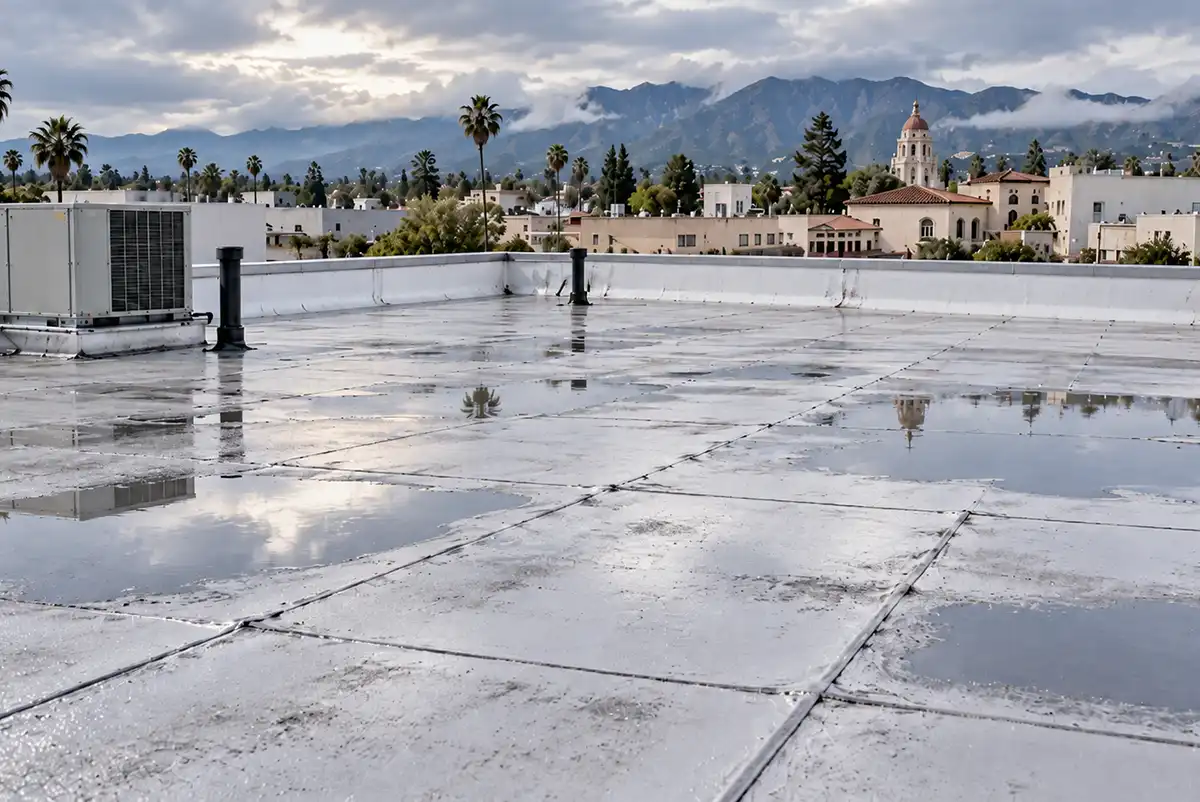
Five inches of standing water over a 1,000-square-foot section of flat roof weighs about 26,000 pounds. That is roughly 13 tons sitting on a surface that was never meant to hold anything. It can accumulate during one bad storm, and most buildings are not ready for it.
If you manage commercial property in Greater Los Angeles or Ventura County, this is worth a few minutes of your attention before the first heavy rain.
A flat roof is built to shed water, not hold it
Despite the name, a "flat" roof is designed with a slight slope toward drains, scuppers, and gutters. Its job is to move water off the building quickly.
When a drain is clogged or slow, that water collects at the lowest point on the roof. The weight of the water presses the roof down slightly at that spot, which makes the low point lower. A lower point holds more water, and more water adds more weight.
This is called progressive ponding, and it feeds on itself. In a heavy storm, a puddle can become a serious structural load within hours. Even when the structure holds, prolonged standing water accelerates membrane wear, stresses seams, and raises the odds of leaks and interior damage.
What actually prevents it: clear drains and a clean roof surface
Two things keep water moving: clear drainage points and a clean roof field.
1. Check every drain, scupper, and gutter before the rain
Not after the first storm. Before it.
Over the dry season, leaves, debris, trash, and membrane granules collect around drainage points. Most property managers don't think about it until water is already backing up. Every roof drain, scupper, and gutter should be inspected and cleared ahead of rainy season.
2. Keep the roof field clear
Debris on the roof surface blocks water from ever reaching the drains. A roof that looks perfectly fine from the ground can have a low spot full of leaves that becomes a small lake the first time it rains.
This is a maintenance job, not a major project
Preventing ponding does not require a big capital expense. It is a walk-the-roof, clear-the-drains, check-the-scuppers job that takes a few hours.
- Every year before rainy season: full roof walk, drain and scupper clearing, debris removal
- Again mid-season: especially if El Niño delivers the heavier storms that have been forecast for this winter
The pattern we see is consistent. Roofs that fail during heavy rain are usually not roofs with a material problem. They are roofs where the water had nowhere to go.
Not sure when your drains were last checked?
If you manage a commercial property and can't say when your roof drains were last inspected, that is a five-minute phone call. Get it looked at before the storms start, not after.