 Skip to content
To address a roof leak effectively, collect water to prevent damage, identify the leak’s source, consider professional help for repairs, and maintain a regular maintenance schedule.
By Dan Cahill and Gary Stewart
When faced with a roof leak, immediate action is crucial to minimize damage and ensure your property’s safety. As experienced roofing specialists serving L.A., Ventura, and Orange counties, we understand the urgency of a leaking roof for business owners, landlords, and property managers. This step-by-step guide provides practical advice on effectively responding to a roof leak, from initial containment measures to long-term repair solutions. Our goal is to equip you with the information you need to protect your building and make informed repair decisions.
Initial Containment Measures
To limit damage when a roof starts leaking, there are two key steps. First, find a way to catch or collect the water, using a bucket, trash can, or similar container. This helps prevent water from hitting the floor and spreading further, especially in multi-story buildings where it can affect multiple levels below. Second, consider addressing the source of the leak directly. Look up at the ceiling where the water is coming from and poke a small hole with a knife or another sharp object. The hole should be no larger than a pen. This creates an outlet for the water, preventing it from accumulating above and directing it to a specific point below.
Assessing the Leak
To effectively address a roof leak, begin by asking a few critical questions to determine the urgency and severity of the situation. Identify the location of the leak, assess the volume of water entering, and note how long the leak has been occurring. These factors will quickly indicate whether the leak is typical, which may require urgent attention but not necessarily immediate emergency action, or if it poses a more serious issue that necessitates a faster response. For instance, a drip every five seconds, while concerning, is relatively common and manageable. However, if the leak is producing a trash can full of water every five seconds, that constitutes an emergency and requires prompt intervention. By asking these questions and applying common sense, you can better understand the situation and decide on the appropriate course of action.
Identifying the Source of the Leak
To accurately identify the source of a roof leak, it is advisable to enlist the help of a roofing professional. Determining the exact location of a leak can often be challenging, as the issue may not be immediately visible from inside the building. Typically, an assessment from the roof itself is required. Once on the roof, the professional will examine the area directly above the leak, searching for various potential issues such as open seams, holes, gouges, or other system failures. Some of these problems can be easily spotted, while others may be more subtle, underscoring the value of professional expertise. If the initial inspection does not reveal the problem, a broader investigation may be necessary, expanding the search to a wider area to uncover the root cause of the leak.
Safety Considerations
The safety risks associated with a roof leak vary based on its size. For a typical leak, the primary concern in the building is the potential for slips and falls from accumulated water. To mitigate this risk, it is advisable to use a bucket or trash can to collect the water. In larger areas, such as commercial warehouses, placing cones and caution tape can help keep people away from the affected zone. However, there are situations where immediate safety issues arise. For instance, if a drain is failing and water is flooding in, the risk escalates significantly. Additionally, if the leak is near an electrical panel or heavy industrial equipment, it is prudent to turn off the power to prevent electrical hazards.
Repair Options
Complete roof replacement is generally not necessary for a single leak. If your roof is in decent condition and you notice a leak, the best course of action is to address the specific issue causing it. In some cases, a temporary repair may be required, especially if weather conditions are unfavorable for a more permanent fix. Permanent repairs should be made during dry weather. Once conditions improve, you can typically execute a targeted, lasting repair. However, if the roof is severely compromised, a total replacement may be needed, though this situation is uncommon for most leaks we encounter.
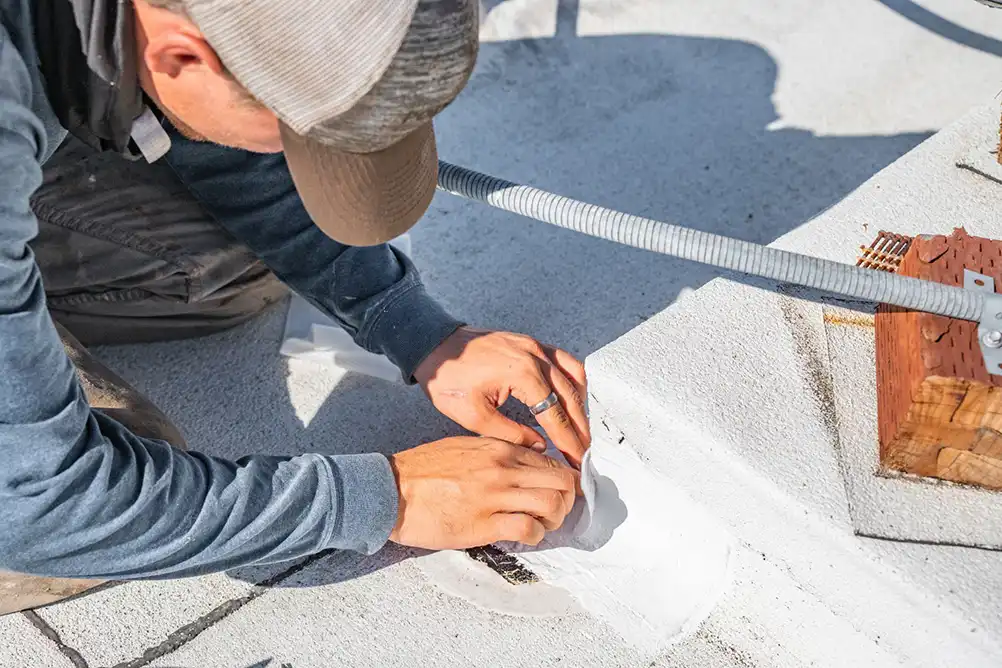
The most effective long-term repair options depend on the roof type and its condition. For a flat commercial roof, a durable solution might involve applying a roofing membrane rather than using mastic or other temporary materials. In contrast, repairing a tile roof may require lifting tiles to address a small area with new underlayment, or it could be as simple as replacing a broken tile. The approach varies based on specific circumstances.
Understanding Insurance and Warranties
Understanding your insurance coverage is crucial when dealing with a roof leak. Some insurance policies do not cover roof leaks, while others may protect under specific circumstances, such as wind damage. It is vital to review your policy details to determine whether roof leaks are covered. If your roof is under warranty, start by contacting the contractor who issued the warranty so they can address the issue, ideally at no cost. If they are unresponsive or unwilling to assist, or if complications arise, ensure that you engage a contractor approved by the manufacturer of the warranty. This ensures that any repairs meet the manufacturer’s standards and helps avoid voiding the warranty while attempting to resolve the leak.
Maintenance to Prevent Future Leaks
A consistent maintenance schedule tailored to your building is crucial. In Southern California, most properties should undergo servicing at least once a year. However, some buildings may require more frequent maintenance, while others could be serviced every other year. This frequency depends not only on the building’s characteristics but also on its surroundings. For instance, properties with tall trees are more susceptible to leaf and debris accumulation, especially during windy conditions, which can lead to clogged gutters and drains. Conversely, buildings with minimal vegetation face a lower risk of clogs, allowing for less frequent maintenance. Regardless of the specific schedule, maintaining a regular upkeep routine is key. Establish a cycle that works for your property and stick to it.
Over the years, I have encountered countless real-world examples of roof leaks. Many issues arise from clogged drains or overflowing gutters, and simply cleaning these obstructions can resolve the problem. Another common source of leaks is cracked pipes and penetrations. These are maintenance-related issues that can be prevented with proactive attention, avoiding the need for reactive measures once a leak occurs. However, some leaks may not be preventable from a maintenance standpoint. For instance, a roof might sustain damage from a windstorm or from a falling tree branch that gouges through it. These incidents occur unexpectedly and, while challenging, are part of the realities of roof maintenance.
Conclusion
Addressing a roof leak promptly and efficiently can prevent more extensive damage and costly repairs down the line. By understanding the nature of the leak, assessing the situation, and engaging a qualified roofing professional when necessary, you can navigate the complexities of roof leak repair with confidence. Remember, regular maintenance is key to preventing leaks and maintaining your roof’s integrity. Should you need assistance, SBR Roofing is here to provide the expertise and quality service that has defined our sixty-year legacy in the industry.
Author Bio
As a proud fourth-generation commercial roofing contractor, Gary Stewart has dedicated his career to upholding the legacy of quality and craftsmanship established by his family. Today, as a managing partner, he works alongside his relatives, blending tradition with innovation to deliver exceptional roofing solutions. His commitment to excellence and teamwork not only strengthens SBR Roofing’s projects but also deepens those family bonds, ensuring that every roof we build is a testament to our shared values of integrity, durability, and service. Together, we are not just constructing roofs; we are building a future for our community and our family lineage.
Dan Cahill began his journey in 2001, accumulating over twenty-three years of experience in the commercial roofing industry. The original owner of SBR Roofing offered a trial period in 2001, coinciding with the bursting of the dot-com bubble. The proposition was simple: give it a year, see if it suits you, and if not, no hard feelings. Surprisingly, Dan found himself sticking around. Fast-forward over two decades, and he continues to thrive in the field.
With a background in sales, Dan discovered a passion for the dynamics of salesmanship, particularly in the freedom it offered from the confines of a desk. The opportunity to engage with people, navigate various situations, and even climb up on roofs appealed to him. This intriguing experience kept Dan hooked, prompting him to stay the course and eventually become a leader in the roofing industry.