 Skip to content
A commercial roof replacement involves assessing roof condition, choosing suitable materials, managing installation disruptions, and understanding warranties and permits for optimal long-term value.
By Dan Cahill and Gary Stewart
When it comes to ensuring the integrity and longevity of your commercial property, understanding the nuances of roof replacement is crucial.
As a business owner, property manager, or landlord in Southern California, you face unique challenges and opportunities when it comes to maintaining your roof. From identifying signs that indicate it’s time for a replacement to navigating the complexities of installation and permitting, informed decision-making can save you time, money, and stress.
At SBR Roofing, we bring over 60 years of experience to the table, providing you with the knowledge and reliable service you need to make the best choice for your roofing needs.
Assessing the Need for Replacement
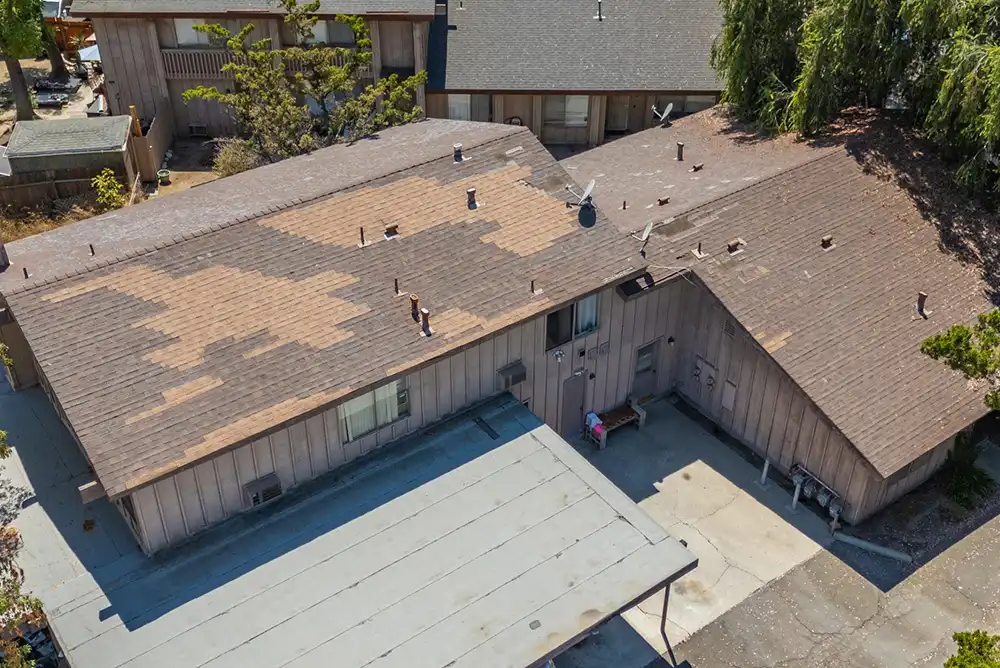
The most effective way to determine if a commercial roof requires replacement is to have a roofing contractor conduct an inspection. Trained professionals can easily assess the roof’s condition and determine whether it’s satisfactory, problematic, or in need of replacement. For those without professional expertise, identifying issues can be more challenging.
However, there are several signs to watch for:
- Drains that discharge onto the side of your property, consistently resulting in piles of sand or granules.
- Water flowing out that appears white.
- Frequent expenditures on leak repairs.
- Leaks that occur every time it rains.
These indicators suggest that it’s time for a professional to take a closer look. While these signs may not definitively mean a replacement is necessary, they certainly warrant further investigation.
Choosing the Right Materials
The most effective roofing systems for Southern California are typically membrane-based solutions. Various materials are available, including coatings and roofing membranes. While coatings can be useful, for optimal long-term performance, a properly installed membrane solution generally outperforms them. In particular, modified membranes or single-ply materials are recommended over options like silicone or elastomeric coatings for durability and longevity.
The Replacement Process
The commercial roof replacement process, which involves removing the old roof and starting anew, begins with the demolition of the existing roof. This initial phase is often the most challenging for tenants or occupants, as roof demolition can be noisy, messy, and disruptive.
Once this stage is completed, a survey is conducted to identify and address any issues with damaged plywood or other substrates before the new roof installation begins. Following this, an inspection from a city or county authority or another permitting body typically occurs to oversee the re-roofing project.
The next step is the installation of the new roof, which can involve various systems and may introduce different variables, such as:
- Noise levels
- Duration of the project
- The potential need to temporarily shut down air conditioning units to facilitate work around them
However, if a reputable company is managing the project, the installation generally proceeds in a clean and orderly manner, with planned milestones that can be anticipated. Finally, toward the end of the project, a touch-up and cleaning phase usually takes place, which is typically quiet and minimally disruptive.
Cost Considerations
The cost of a commercial roof replacement is primarily influenced by the roof’s size; for instance, a 100-square-foot roof will be significantly less expensive than a 100,000-square-foot roof. However, when comparing roofs of similar sizes, the complexity of installation can significantly increase costs.
For example, restaurant roofs often have numerous HVAC units, exhaust fans, and other mechanical equipment, creating a cluttered environment that complicates installation. In contrast, larger retail buildings like Costco or Target typically have fewer AC units spread across expansive roof areas, which simplifies the installation process. Therefore, the more intricate a roof’s design and the greater the number of components, the higher the cost per square foot tends to be.
In terms of long-term value, the quality of both the materials and the installation is paramount. Choosing a high-quality combination of these factors can result in a roof that not only meets its warranty but potentially exceeds it by several years, emphasizing service life over mere warranty duration.
Ultimately, investing in a roof that has a higher upfront cost is more economical in the long run if it lasts significantly longer than cheaper alternatives.
Communication and Planning
Effective communication with tenants or businesses is the crucial first step in a commercial roof replacement project. It’s vital that they understand the scope of the work and potential disruptions, such as noise or the temporary shutdown of essential equipment like air conditioners. By establishing clear communication from the outset, project managers can strategically schedule these disruptions during less impactful times.
For instance, if a business operates Monday through Friday, certain tasks can be carried out on Saturdays. Additionally, understanding the daily flow of business—such as slower mornings and busier afternoons—allows for better planning.
By engaging with clients and gaining insight into their operational dynamics, we can tailor the roofing project to minimize interruptions and effectively accommodate their needs.
Permits and Inspections
Obtaining the necessary permits for a commercial roof replacement is typically straightforward. Generally, you will need just one permit from the city where the property is located; however, if you’re in an unincorporated area, you might require a permit from the county instead. This is usually a simple re-roof permit.
Regarding inspections, most cities require two inspections, and a third may be required on occasion. The first inspection occurs throughout the life and construction of a roof to ensure it has been installed correctly, including an assessment of the condition of the plywood or framing after the old roof has been removed.
The final inspection occurs after the new roof installation is complete, ensuring that the new roof covers the entire building properly.
Warranties to Consider
When replacing a commercial roof, there are typically two types of warranties to consider: a manufacturer’s warranty that covers material defects, and a labor or contractor’s warranty that pertains to workmanship. Manufacturer warranties are generally shorter, often limited to a basic limited lifetime warranty, while labor warranties can be as short as one year.
At SBR Roofing, we typically offer a lifetime warranty, with some companies providing up to 10 years, depending on the roofing system and maintenance requirements. While the manufacturer’s warranty is significant, it rarely comes into play unless the manufacturer is particularly subpar; the contractor’s skill in installation is the key factor. Issues related to workmanship tend to arise early, often within the first few years, as improperly installed roofs will leak soon after installation.
Over time, particularly around the five and ten-year marks, problems shift more towards wear and tear. A yearly maintenance plan can help mitigate these issues, but neglecting a roof after installation can lead to sealant failures and other material issues that require maintenance after about ten years to ensure everything remains in good working order.
Conclusion
Navigating the complexities of commercial roof replacement can be daunting, but with the right information and a trusted partner like SBR Roofing, you can approach the process with confidence. By understanding the costs, potential disruptions, and warranty options, you can make informed decisions that not only protect your investment but also ensure the safety and satisfaction of your tenants or customers.
Trust in our decades of experience and commitment to quality workmanship to deliver a roofing solution that stands the test of time. Plan your commercial roof replacement with confidence—connect with SBR Roofing today.
About the Author
As a proud fourth-generation commercial roofing contractor, Gary Stewart has dedicated his career to upholding the legacy of quality and craftsmanship established by his family. Today, as a managing partner, he works alongside his relatives, blending tradition with innovation to deliver exceptional roofing solutions. His commitment to excellence and teamwork not only strengthens SBR Roofing’s projects but also deepens those family bonds, ensuring that every roof we build is a testament to our shared values of integrity, durability, and service. Together, we are not just constructing roofs; we are building a future for our community and our family lineage.
Dan Cahill embarked on his journey in 2001, accumulating over 23 years of experience in the commercial roofing field. The original owner of SBR Roofing extended a trial opportunity in 2001, coinciding with the burst of the dot-com bubble. The proposition was simple: give it a year, see if it suits you, and if not, no hard feelings. Surprisingly, Dan found himself sticking around. Fast-forward over two decades, and he continues to thrive in the field.
With a background in sales, Dan discovered a passion for the dynamics of salesmanship, particularly in the freedom it offered from the confines of a desk. The opportunity to engage with people, navigate various situations, and even climb up on roofs appealed to him. This intriguing experience kept Dan hooked, prompting him to stay the course, eventually becoming a leader in the roofing industry.